Introduction
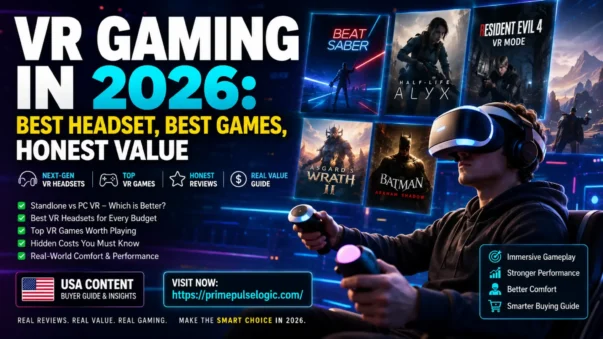
Yes, VR Gaming in 2026 is finally worth it for a lot of buyers, but only if you choose the right headset for the right reason. That is the honest answer. The market is no longer pretending that one device fits everyone. Meta is still pushing Quest 3 and Quest 3S as its public consumer lineup, PlayStation VR2 still sits at the center of PS5 VR, and Valve has now positioned Steam Frame as a 2026 wireless VR headset built around the Steam library streaming. In plain English, the category has grown up, but it still asks more of you than cloud gaming 2026 or browser games 2026 ever will.
The real shift is not just better hardware. It is a better fit, better ecosystem value, stronger content library depth, and fewer “this is cool for ten minutes” devices. If you want immersive gaming, a real sense of presence, and games that actually use your body, VR is finally mature enough to matter. If you only want the cheapest way to play games, though, a VR headset still is not the obvious answer.
The best headset is the one you can actually wear for an hour.
1: Is VR gaming finally worth it in 2026?
Here’s the thing: VR gaming feels worth it in 2026 because the category has moved from novelty to choice. Meta’s current lineup gives buyers a clear split between the standalone headset approach of Quest 3 and Quest 3S, Sony keeps PS VR2 tied to the PS5 but now extends it to PC with an adapter, and Valve’s Steam Frame is aimed squarely at players who want wireless SteamVR streaming. That means you can now buy for your setup style instead of settling for whatever was available.
What changed since 2024 and 2025 is not just the buzz. The current headsets bring better visual fidelity, stronger tracking, more stable inside-out tracking, and better controller tracking than older VR systems. Most people tried once and abandoned. Meta’s Quest 3 page highlights 4K resolution, spatial audio, and premium comfort, while Quest 3S pushes a higher resolution display and full-color pass-through into a lower-friction package. That matters because people do not quit VR only because of bad games; they quit because of poor fit, weak battery life, and clunky setup.
Who should still skip VR for now? If you hate setup, do not want to think about IPD adjustment, and only play short casual sessions where a normal screen already satisfies you, VR may still feel like extra work. That is not a flaw in the technology. It is a reminder that VR asks for more attention than traditional gaming. For some people, that is a fair trade. For others, it is not.
2: What is the best VR headset in 2026?
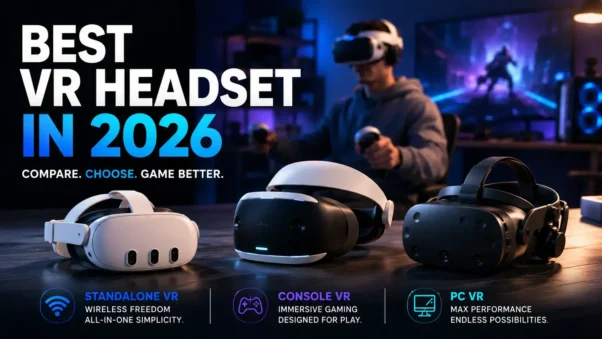
The best VR headset 2026 is not one single device for everyone; it depends on how you play. If you want the easiest entry point, a standalone VR headset like Meta Quest 3 or Meta Quest 3S is the cleanest answer. If you want the strongest console path, PS VR2 makes sense for PS5 owners. If you want the deepest PC-first setup, Steam Frame and PC VR options become more interesting. The smartest buyers compare field of view, refresh rate, lens clarity, latency, and the overall setup process, not just the sticker price.
Meta Quest 3 is the premium standalone pick because Meta says it offers 4K resolution, rich spatial audio, and about 2.2 hours of battery life. Quest 3S is the more affordable entry point, and Meta describes it as improved graphics with a higher resolution display and full-color pass-through. That makes Quest 3S easier to recommend for beginners, families, and buyers who want wireless VR without a big setup headache.
PS VR2 still matters because Sony positions it as the next generation of VR gaming on PS5, and it includes the headset, Sense controllers, and the play space setup that many console players already understand. Valve’s Steam Frame is different because Valve calls it a streaming-first, wireless VR headset that can handle your whole Steam library. That gives serious buyers a useful split, console exclusives on one side, and Steam-native flexibility on the other.
| Buyer Type | Best Choice | Why |
| Beginners | Meta Quest 3S | Easy setup, lower friction, standalone headset |
| Premium standalone buyers | Meta Quest 3 | Better comfort, stronger display, richer audio |
| PS5 owners | PS VR2 | Strong exclusive titles and console focus |
| PC enthusiasts | Steam Frame or PC VR | Better visual fidelity, SteamVR access, mod-friendly value |
| Sim fans | PC VR | Stronger, higher-resolution feel and deeper sim support |
3: Is Meta Quest 4 real, or should you buy now?
The practical answer is simple: do not base your purchase on rumor. Meta’s public shopping pages still focus on Quest 3 and Quest 3S, plus their current accessories and setup flow, which tells you where the company wants buyers to live right now. That does not prove what Meta may or may not launch later, but it does prove that the current consumer path is already here and fully supported.
So, should you wait or buy now? Wait only if you genuinely do not need VR this year. Buy now if you want to play, learn, or test the medium instead of sitting on your hands for a product that may shift again. The setup is already well documented through Meta’s Horizon mobile app and Horizon Link app on PC, and that makes the current generation a real purchase, not a placeholder. In other words, wait or buy now should be decided by use, not hype.
4: Which VR games are actually worth playing?
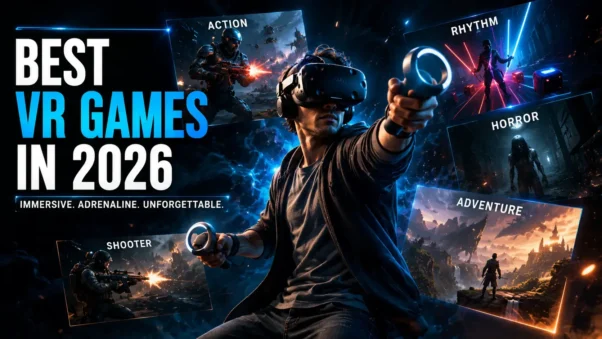
The best VR games to play in 2026 are the ones that give you replay value, not just a one-time wow moment. Meta’s own gaming page highlights titles like Batman: Arkham Shadow, Assassin’s Creed Nexus VR, Asgard’s Wrath 2, and Among Us VR, which tells you something important: the platform still leans hard on games that mix big-brand appeal with motion-driven fun. Beat Saber also remains a classic because it works across Steam, Meta Quest Store, and PlayStation Store, which makes it one of the clearest examples of a game that helped define rhythm games in VR.
If you want a better buying filter, think in categories. Horror VR works because fear feels personal when something is in your space. Fitness VR works because your body becomes part of the game loop. Simulation games work because VR adds depth and scale that a flat screen cannot copy. Social VR works when the hangout itself matters. That is why games like Batman: Arkham Shadow, Asgard’s Wrath 2, Beat Saber, and Resident Evil 4 VR Mode keep showing up in real recommendations; they give the player a reason to come back.
A good rule is this: if a game could be just as good on a TV, it probably is not the best VR game. The real winners use room-scale movement, seated VR when needed, and a design that makes the headset feel like the point instead of the gimmick. That is where VR finally stops being a demo machine and starts feeling like a platform.
5: Standalone VR vs PC VR, which gives better value?
For most people, standalone VR gives better value because it is easier, faster, and less annoying. You pick up the headset, finish the setup, and start playing. Meta even walks users through setup with the Horizon mobile app and, for PC use, the Horizon Link app. That simple path matters more than people admit, because convenience drives actual usage, not spec sheet bragging rights.
PC VR still wins for players who want deeper graphical detail, stronger mod potential, and a more serious hardware feel. PS VR2 now sits in an interesting middle ground because Sony supports it on PS5 and also on Windows PC with the adapter and required PC setup. Valve’s Steam Frame pushes the PC idea even further by leaning into wireless streaming and the whole Steam library. That is why the best buyer guide is not “what is best,” it is “what fits your gaming life.”
What this really means is that wireless VR wins for ease, while tethered VR wins for depth. If you care most about compatibility, content access, and a low-friction ecosystem, standalone still has the smoother road. If you care most about power, refresh rate, and the best possible PC-side VR performance, a wired or PC-driven setup still makes sense.
6: What hidden costs make VR more expensive?
This is where a lot of buyers get surprised. The headset price is only the start. Meta sells the Elite Strap with Battery, which it says reduces facial pressure and distributes weight more evenly. It also sells carrying cases, facial interfaces, battery accessories, and other add-ons separately. In plain English, the real bill grows fast when you try to improve headset comfort.
That extra spending often includes a battery strap, facial interface, lens inserts, or a carrying case, plus the games themselves and, in some cases, platform-specific purchases or subscriptions. A buyer can easily think they are buying one device and end up buying a full kit. That is why this article keeps repeating real cost, not because the industry is shady, but because ownership costs are where value gets judged.
A quick reality check helps. If a headset looks cheap but needs a strap, a dock, and a case to feel good, it is not really cheap. It is just underpriced on the shelf. That is the difference between a shiny headline and actual buyer guide value.
7: What comfort issues should buyers know?
The biggest comfort issues are not mysterious. They are motion sickness, heat, pressure on the face, a bad fit, and fatigue after a short session. Some people also dislike the way long sessions can push against glasses, headset foam, or controller posture. That is why accessibility matters as much as power. A headset can have strong high resolution and still feel lousy after 20 minutes if it does not fit you well.
You also have to think about how you play. Some users prefer seated VR because it lowers physical strain. Others want room-scale play because that is where VR feels magical. Sony’s PS VR2 support page even walks users through play area setup, which shows how much the medium still depends on the space around you. VR is personal in a way that flat gaming is not.
If you want the cleanest comfort rule, use short sessions first, then build up. That matters more than chasing the most powerful device on day one. A comfortable headset used often beats a premium headset left on a shelf.
8: Which VR headset is best for beginners?
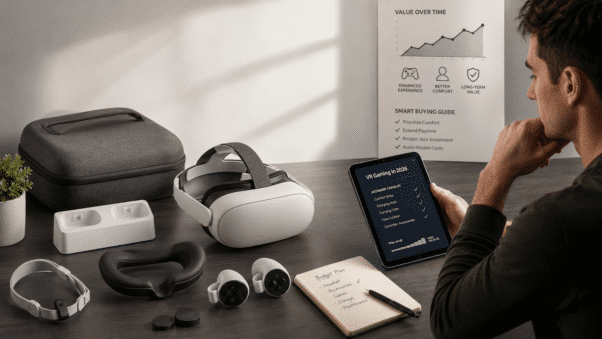
The best VR headset for beginners is usually a standalone model because it removes the hardest part, the setup process. Meta Quest 3S is the easiest starting point for many first-time buyers, while Quest 3 gives you a more premium feel. That is a pretty clean split, budget-friendly entry on one side, stronger all-around experience on the other.
Beginners usually care less about raw numbers and more about whether the headset works without drama. They want wireless play, simple onboarding, and enough game choice to feel the device was worth it. That is why the Quest family is such a natural beginner recommendation, especially for families, casual users, and anyone who does not want a PC hanging over the whole experience.
9: Which VR headset is best for serious gamers?
The best VR headset for serious gamers is the one that matches your platform habits. If you live on PS5 and want exclusive titles, PS VR2 is still very attractive. If you live on Steam and want a wireless, streaming-first machine that can tap your Steam library, Steam Frame is the new head-turner. Serious gamers care about visual fidelity, low latency, controller tracking, and game depth, so this is where the platform choice really starts to matter.
PS VR2 is especially interesting because Sony now supports it on PC as well, which expands compatibility and gives PC players more flexibility. At the same time, Steam Frame gives Valve fans a headset built around wireless streaming and the broader Steam ecosystem. That is a rare kind of choice, because it lets power users decide whether they care more about PlayStation exclusives or SteamVR freedom.
If you are the kind of player who notices frame pacing, refresh rate, and exact clarity in the lens, this section is your real decision point. The best headset is not the one with the loudest marketing. It is the one that matches your library, your comfort level, and your willingness to deal with cables or batteries.
10: Final verdict: Should you buy now?
Yes, buy now if you want VR Gaming in 2026 for the right reasons, meaning immersion, fitness, horror, rhythm, simulation, or a new kind of social play. No, wait, if you are only curious and not ready to spend real money on the headset, the accessories, and the games. The best version of VR today is not “perfect,” it is “good enough to feel worth it when you choose well.”
| Buyer Type | Best Move | Why |
| Beginner | Buy Quest 3S or Quest 3 now | Easier setup, strong standalone value |
| PS5 owner | Buy PS VR2 now | Strong PS5 support and exclusives |
| PC gamer | Buy PC VR or Steam Frame now | Better depth, Steam access, flexible ecosystem |
| Price watcher | Wait for deals | Real cost drops when accessories go on sale |
| Curious shopper | Wait or borrow first | Good way to test comfort before buying |
FAQs:
Is VR gaming worth it in 2026?
Yes, for the right buyer. VR gaming is worth it in 2026 if you want real immersion, strong game variety, and a device you will use more than once a month. It is less worth it if you hate setup, dislike wearing a headset, or only play casual games on a TV.
What is the best VR headset in 2026?
For most people, the best VR headset 2026 is Meta Quest 3 or Quest 3S, depending on budget. Quest 3 feels more premium, while Quest 3S gives a simpler entry point. PS VR2 and Steam Frame are stronger picks for platform-specific buyers.
Should I wait for Meta Quest 4?
Only if you are not in a hurry. Meta’s public store still focuses on Quest 3 and Quest 3S, so the sensible move is to buy for what exists now instead of waiting for rumor cycles. Waiting makes sense only when your current headset still works fine.
What VR games are actually worth playing?
The best games are the ones with replay value, strong movement design, and a reason to come back. Beat Saber, Asgard’s Wrath 2, Batman: Arkham Shadow, and Resident Evil 4 VR Mode are good examples because they use VR as the point, not the gimmick.
Is standalone VR better than PC VR?
Standalone VR is better for ease, while PC VR is better for depth. If you want fast setup, portability, and fewer cables, a standalone wins. If you want stronger visual fidelity, deeper mod options, and more serious sim use, PC VR still has the edge.
Ready to Choose the Right VR Setup?
If you are planning content around VR Gaming in 2026, or you want a smarter buying path before you spend money, PrimePulseLogic is a strong place to build from. Use this guide as your starting point, then connect it to your own VR headset guide, VR accessories guide, and best VR games 2026 content so readers can move from curiosity to action without getting lost.
For more buyer-first VR content, the next smart step is to complete your contact form or reach out through PrimePulseLogic so you can turn this topic into a real content cluster, not just one article.