
Introduction:
Here’s the problem. Developers no longer try to write code. The real challenge is making sense of huge repositories filled with thousands of files, hidden dependencies, and years of commit history. This is where repository intelligence, AI code understanding, and modern AI development tools come into play.
Instead of guessing how a project will work, you now have a system that uses artificial intelligence to perform deep analysis of your code base and identify patterns across your code base. What this means in practice is simple. AI no longer operates like a fancy autocomplete box. Rather, it’s more like a teammate that remembers everything in your repository. In this Repository Intelligence AI 2026 tutorial, learn how semantic code and the Repository Search Wizard transform your software development process.
What Repository Intelligence AI 2026 Really Means
Repository intelligence describes a new generation of development tools that analyze an entire repository before generating insights. Traditional assistants only observe the code near your cursor. Modern systems instead perform codebase analysis AI across every module, configuration file, and documentation entry. By building repository embeddings and applying semantic indexing, the AI constructs a map of how the software works. This approach transforms AI developer tools into a form of intelligent repository explorer that helps engineers understand complex architecture quickly.
What this really means is simple. When developers ask questions, the system searches the repository, retrieves relevant files, and then feeds those files to a model with a large context window AI capability. The model analyzes relationships between functions and modules before answering. That process allows a context aware coding assistant to provide explanations about architecture, not just syntax suggestions.
Why developers needed repo-level AI understanding
Large applications contain layers of complexity that traditional tools cannot interpret. Modern systems often follow monorepo architecture, which means a single repository contains many services, libraries, and deployment scripts. Developers trying to track a feature across this structure must perform deep manual exploration. Tools built around repository intelligence solve this issue through advanced repository search and structured code dependency graph mapping.
Once the AI builds that graph, developers can ask questions such as where authentication logic exists or which services call a particular API. The system performs large codebase AI analysis using source code embeddings and returns the most relevant sections. This capability improves productivity while strengthening AI developer productivity in large engineering teams.
Reasons modern AI coding tools moved beyond autocomplete
Autocomplete technologies helped coders finish syntax faster, but they didn’t give them any more information. They guessed what tokens would be based on rows that were close by, but they didn’t think about architecture, dependencies, or past selections. As the project grew, engineers required tools that could properly grasp the AI code and look at the software architecture in detail.
Because of this need, more advanced tools for benchmark analysis have been devised. A variety of several strategies is used by modern helpers. To start, utilize AI indexing to create a list of all the files in your repository. Next, we use vectors to show what the functions and documents signify. Lastly, use semantic code search to make sure you always give the proper information when a developer asks for it. This strategy with multiple layers makes AI 2026 coding tools smart partners in development.

From Autocomplete to Full Repository Intelligence
The evolution from autocomplete to repository intelligence represents a major shift in the way developers interact with AI. Early systems simply guessed the next line of code. They were unaware of the surrounding architecture. The current assistant scans the entire repository using AI codebase analysis tools that map dependencies and identify relationships between components. This broader perspective allows AI-based programming assistants to perform tasks that previously could not be automated.
Developers now rely on AI software development assistants for more than just coding. These systems explain complex modules, suggest file-wide improvements, and help teams understand legacy applications. Rather than generating individual snippets, AI developer automation tools evaluate your entire codebase and recommend consistent changes that align with project conventions.
Limits of traditional AI code assistants
Traditional assistants have limited visibility. They only looked at the open file and a few lines surrounding it. In large projects, this narrow context led to frequent errors. The wizard can generate functions that already exist elsewhere or recommend models that conflict with established architectures. Without repository intelligence, AI cannot perform reliable analysis of your code base.
Another limitation involved the absence of structured data. Earlier tools did not analyze commit history, architecture documents, or issue discussions. This meant they ignored valuable signals describing why code evolved in a certain way. Modern AI developer tools solve this by combining commit history analysis with repository indexing, which allows them to interpret decisions made by the development team.
Reasons developers need whole-repo context
Software rarely lives inside a single file. Features depend on services, configuration layers, and infrastructure components. A developer updating authentication logic must understand how it interacts with middleware and database queries. Without the whole repository context, an AI system cannot detect these relationships. Full monorepo AI analysis therefore becomes essential.
When an assistant understands the entire project, it can suggest safer changes. The system recognizes architectural conventions and applies them consistently across modules. This ability supports advanced AI code refactoring tools that update patterns across many files while respecting the design of the application.

How AI Understands Entire Codebase in 2026
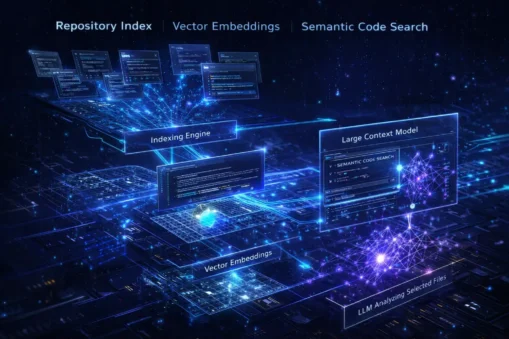
The idea that AI can understand huge codebases may seem unrealistic. In fact, this process relies on multilevel data structures that efficiently summarize information. The tool first scans the repository and indexes files, functions, and comments. Next, we generate source code embedding’s that reflect the semantic meaning of the code. These implementations provide powerful semantic code search capabilities that instantly retrieve matching files.
After retrieval, the system sends selected context to a model with a large context window AI architecture. The model performs reasoning across those files and generates explanations or code suggestions. This process allows AI code assistants explained in simple terms, an AI that reads relevant pieces of your repository before responding.
Whole-repo indexing, embedding’s, semantic search
Whole repository indexing acts like a search engine for code. Each file receives a vector representation through embeddings. These vectors allow the AI to compare meanings rather than exact words. When a developer asks a question, the system uses these vectors to search the repository. Extract the most important sections of your design and integrate them into a model for analysis.
This architecture uses artificial intelligence to bring powerful improvements to your coding workflow. Developers no longer need to search the catalog for specific features. Instead, rely on the semantic index and documentation of your AI codebase to quickly understand how components interact.
Dependency graphs and cross-file relationships
Dependency mapping gives you a deeper knowledge. AI makes a dependency tree that depicts how modules are imported and how they work together. The application architecture may be seen in this code dependency graph. AI DevOps tools can find problematic dependencies or see which parts would be affected by a proposed change by looking at this graph.
This functionality seems like a map of the whole system to the developer. Wizards can see how data transfers between services and figure out which modules are using shared libraries. Having this much knowledge makes both troubleshooting and planning the architecture better.
Reasons AI reads commits, PRs, and architecture
Source code by itself doesn’t always reveal the whole story. Commit messages tell you why changes were made. Pull request discussions record design choices and trade-offs. Architecture documents spell forth the system’s long-term ambitions. Advanced repository intelligence tools look at all of these sources to help AI code comprehend better.
The helper learns more about the project by putting code in a historical context. For instance, the commit history can show that a given module is just there to make things work with older versions. The AI doesn’t advise modifications that would disrupt legacy support when it reads that information through commit history analysis.
GitHub AI Coding Tools Leading the 2026 Shift
GitHub hosts millions of repositories and therefore serves as the center of the development ecosystem. Many modern AI coding tools 2026 integrate directly with GitHub repositories to access code, pull requests, and issues. This integration allows assistants to perform real time codebase analysis AI without requiring separate infrastructure.
Because of this environment, platforms such as the GitHub AI code assistant ecosystem continue shaping the future of development. These tools combine repository indexing, vector search, and natural language reasoning to help developers explore projects quickly.
Copilot, Cody, Windsurf and repo-aware assistants
Several tools illustrate how repository intelligence operates in practice. GitHub Copilot focuses on inline coding support. Cody emphasizes full repository indexing and semantic exploration. Windsurf introduces agentic AI coding tools capable of performing multi step development tasks.
| Tool | Repo Understanding | Best For | Limitation |
| Copilot | File level context | Coding speed | Limited repo awareness |
| Cody | Full repo indexing | Codebase analysis | Setup needed |
| Windsurf | Agentic workflows | Multi file edits | Learning curve |
These platforms represent the new generation of code intelligence platforms built around repository level reasoning.
Reasons GitHub ecosystem dominates AI development
GitHub holds an advantage because it already hosts vast amounts of source code and collaboration data. Issues, pull requests, and discussions reveal how projects evolve. When AI software development tools analyze this information, they gain insights that extend beyond code.
Integration also matters. Developers already use GitHub inside editors and CI pipelines. This means AI developer automation tools can operate directly within existing workflows. By combining repository data with advanced models, the GitHub ecosystem accelerates the growth of AI programming assistants.
Key Capabilities of Modern AI Code Assistants
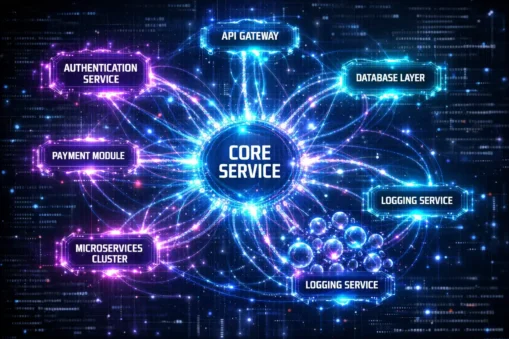
Modern assistants perform many tasks beyond writing code. They analyze architecture, generate documentation, and detect potential issues across multiple services. By using repository embeddings and semantic indexing, these systems evaluate how components interact within the repository.
Developers therefore treat them as intelligent collaborators rather than simple automation scripts. When integrated into DevOps workflows, AI software engineering assistants can assist with debugging, refactoring, and documentation tasks.
Cross-file refactoring across large repositories
When the AI knows how modules depend on each other, it is easier to make big changes. The code dependency graph lets the assistant find any file that has been changed. This feature lets you automate complex code restructuring across large repositories.
For example, if a company changes its logging libraries, the assistant can find all the places where they are used and make sure they are all up to date. This feature makes it less likely that mistakes will happen and makes all AI developers on the team more productive.
Reasons AI detects architecture patterns
Repositories often follow rules that aren’t written down, like how to name things, how to organize folders, or how to share libraries. AI systems figure out what these signals mean by looking at the context and the software architecture. When the patterns are clear, the assistant writes code that fits with the design of the project.
Over time, this feature helps keep things consistent in the repository. Developers get suggestions that fit with the architecture instead of going against it.
Automated debugging and intelligent documentation
Debugging complex systems requires tracing data across services. With monorepo AI analysis, assistants analyze how requests travel through modules. The AI identifies potential failure points and suggests fixes.
Documentation also improves because assistants can generate summaries based on AI codebase documentation analysis. These summaries help new developers understand the system quickly.
Real Workflows AI for Developers 2026 Enables
Repository intelligence changes daily development routines. Engineers interact with assistants using natural language questions instead of manual searches. The AI performs large codebase AI analysis and returns structured explanations.
This procedure makes people more productive and cuts down on the time they spend looking through directories. While AI developer tools take care of exploration chores, developers focus on addressing problems.
Faster onboarding for new developers
New developers often struggle to understand unfamiliar projects. Repository intelligence New developers have a hard time understanding projects they haven’t worked on before. Repository Intelligence simplifies this process by providing a simple description of architecture and dependencies.
Engineers don’t study thousands of lines of code. They ask questions directly. The wizard will search your repository and provide clear answers with working code examples to back it up. This method speeds up onboarding and increases productivity within your team of AI developers.
Reasons repo intelligence accelerates refactoring
When teams avoid major changes, technical debt accumulates. Repository intelligence eliminates these variations by mapping dependencies across projects. The wizard identifies the modules affected by the proposed update. With AI code refactoring tools, teams can modernize systems faster and maintain a healthier code base.
Incident investigation using AI repo analysis
When a production system fails, developers need to quickly identify the root cause. Repository analysis helps you track dependencies between services. The AI examines the dependency graph and identifies the modules involved in a particular behavior. This feature supports faster debugging and improves AI DevOps tools used in incident response.
Risks When AI Understands Your Entire Codebase
Repository intelligence has many great benefits, but teams need to use it wisely. Sometimes, AI models give wrong advice. Developers should carefully look over all of the changes that were made. Security is also important. Companies need to look into how AI coding tools 2026 handle proprietary code and make sure they have the right protections in place.
Hallucinations and unsafe multi-file edits
Sometimes, AI systems make mistakes and give you wrong answers. These are called hallucinations. These mistakes can cause small bugs to show up in a lot of different files. Good testing habits help find these kinds of problems early.
Teams can keep their reliability while taking advantage of automation by using AI software engineering assistants and automated tests together.
Reasons developers must keep humans in review
It’s still necessary for people to keep an eye on things. Developers know more than anyone else about what businesses need and what systems can’t do.
So, you should think of AI ideas as just that: ideas. Automated testing and pull request reviews are two ways to make sure that the development process is reliable.
How to Prepare Your Repository for AI Tools?
AI systems can look at data better when they have a framework that is well-organized and documented. Organized folders and clear check-in messages are good signs.
These rules help people work together better and make AI repository indexing more accurate.
Writing better commit messages for AI context
Commit messages serve as a historical record of project decisions. A clear explanation helps AI code understanding systems understand why the change occurred. When developers create descriptive messages, the AI’s ability to analyze check history improves and provides meaningful insights.
Reasons architecture docs improve AI accuracy
The architecture document explains how the services work together and why certain design choices were made. Your AI assistant can read these articles to learn more.
This context allows the AI programming assistant to suggest ideas that align with the intended design of the system.
Future of Repository Intelligence for Developers
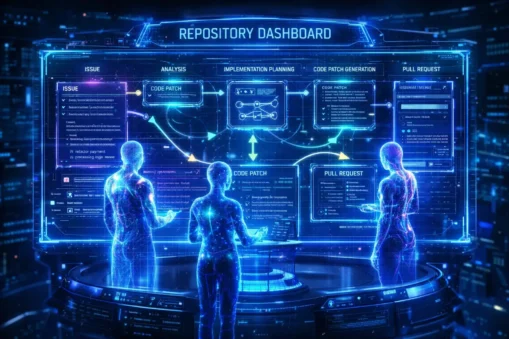
The next stage of development is to create AI systems that can do things on their own. These assistants review repositories, suggest solutions, and make changes themselves.
Developers will guide these systems rather than writing every line manually.
Agentic GitHub assistants and autonomous coding
Agent based assistants represent the next step for agentic AI coding tools. These systems examine issues, generate implementation plans, and submit pull requests.
Although humans still review the results, automation handles routine development tasks.
Reasons AI will act like a project brain
As assistants analyze repositories over time, they accumulate knowledge about architecture, workflows, and historical decisions. This information becomes a shared memory for the development team.
In many ways the assistant evolves into a central project knowledge hub.
Developer Diagram: How Repository Intelligence Works
Repository Intelligence Workflow
Developer → IDE plugin → repository index → embedding’s → LLM → code patch → pull request
FAQs;
Does GitHub Copilot understand the entire repo?
GitHub Copilot mainly focuses on the open file and surrounding context. Some repository signals exist, yet full repository intelligence requires deeper indexing tools such as Cody or Windsurf that perform complete codebase analysis AI.
Is repository intelligence safe for private code
Security is determined by how the AI platform handles your code. Some tools analyze your repository locally, while others send data to a cloud model. Organizations should review their policies and choose a platform that adheres to safe practices for using AI DevOps tools.
How teams prepare repositories for AI tools
Teams must maintain clear documentation, descriptive commit messages, and an organized project structure. These technologies improve indexing of AI repositories, improve semantic code searches, and help assistants accurately understand system architecture.
Ready to Use Repository Intelligence in Your Development Workflow
Repository intelligence powers next-generation software development. Teams that implement these technologies early will be able to understand systems faster, refactor code with more confidence, and solve problems faster.
If you want expert guidance on integrating Repository Intelligence AI 2026 into your development environment, the specialists athttps://primepulselogic.com/ can help. Their engineers specialize in advanced AI development strategies, repository optimization, and intelligent automation solutions.
Visit Prime Pulse Logic today and start building smarter development workflows powered by modern AI intelligence.