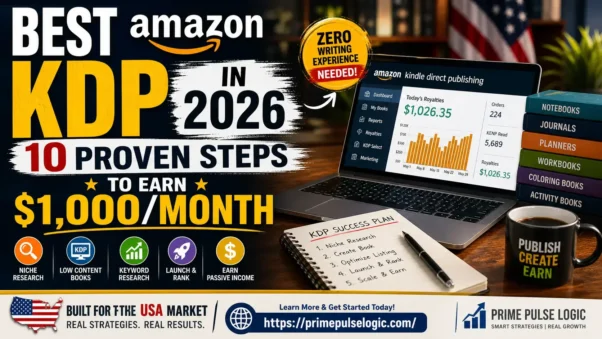
Yes, Amazon KDP still matters in 2026, and it still offers beginners a real path into publishing if they treat it as a system, not a lottery. This guide explains Kindle Direct Publishing, how to make money with Amazon KDP, and the exact beginner path that can turn a simple idea into a book business. If you want to earn $1,000/month publishing Kindle books with zero writing experience, the real answer is not hype. It is a smart niche choice, clean execution, and steady publishing inside the U.S. publishing market.
Here’s the thing: Amazon KDP for beginners in 2026 is not about chasing shortcuts. It is about learning self-publishing on Amazon, using Kindle book publishing the right way, and building books that fit buyer demand. In plain English, you do not need to be a novelist to start. You need a clear process, a useful book idea, and enough patience to let the system work. That is what makes this topic worth reading now.
Why Amazon KDP in 2026 Still Matters for Beginners
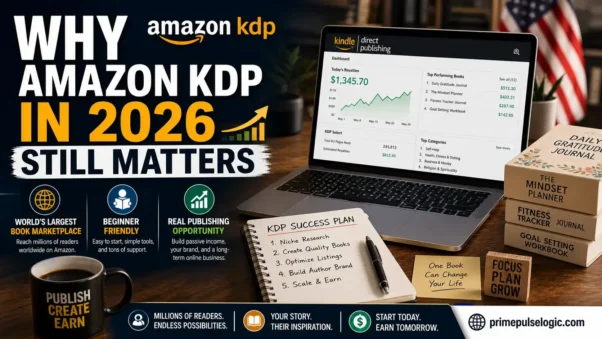
Amazon KDP still matters because Amazon owns the world’s largest book discovery machine. Readers still search the Kindle store, browse Amazon Kindle books, and buy books every day through search, category pages, and recommendations. The market looks tougher now, but that also means weak books get exposed faster. Strong books still have room to rise, especially when the listing is built for the Amazon search algorithm and supported by good book listing optimization.
What changed is simple: buyers expect better covers, clearer descriptions, and more specific promises. The old trick of uploading a rushed book and hoping for passive income does not work as well. But beginners still have room to win because the market rewards clarity. If your title solves one problem for one reader, and your author brand looks trustworthy, you can still earn attention. That is why Amazon KDP remains worth learning in 2026.
Why $1,000/Month Is Possible with Amazon KDP in 2026
The goal sounds big, but the math is not magical. To reach $1,000 a month, you usually need a mix of good pricing, consistent sales, and more than one title. That is why how many books it takes to earn $1,000/month on KDP matters more than a single lucky upload. A beginner should think in catalogs, not one-hit wonders. One strong book can start the engine, but several related books usually carry the weight.
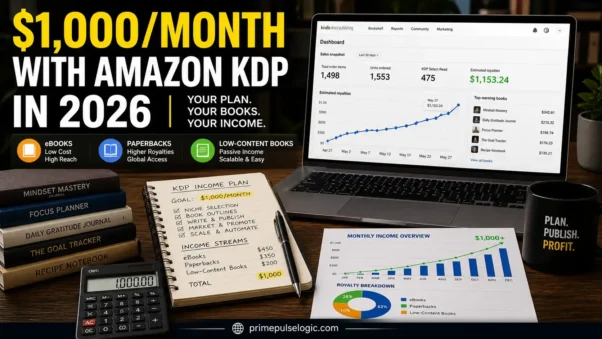
A simple way to think about it is this: if one book earns a small margin per sale, then volume creates the result. That is where a royalty calculator helps. It shows how royalties, royalty rates, and print costs affect your profit. For example, an ebook can earn differently from a paperback, and a low-content book can behave differently again. The real win comes when you know your break-even point and build around it instead of guessing.
| Format | Best use | What to watch |
| Ebook | Fast launch, lighter production | Needs strong keywords and a clean description |
| Paperback | Better for trust and depth | Print-on-demand cost affects profit |
| Low-content book | Planners, journals, simple repeats | Needs original value and a sharp niche |
A useful rule says, “One good book beats five rushed ones.” That sounds simple because it is. In a real Amazon KDP income strategy, the book that sells is usually the one that feels specific, helpful, and easy to buy.
Why Amazon KDP in 2026 Works Even Without Writing Experience
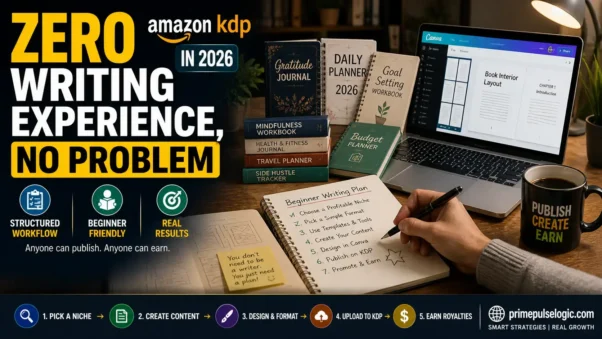
You do not need to start as a writer. What you need is a zero-writing-experience KDP workflow that keeps you moving without blank-page stress. That starts with structure. You pick a niche, outline the book, design the pages, polish the book description, and then publish. The content still needs value, but you do not have to invent everything from scratch. That is the heart of how to publish Kindle books without writing.
The easiest formats for beginners are usually low-content books on Amazon KDP, workbooks, journals, planners, and simple niche ebooks. These formats fit a beginner publishing workflow because they are easier to build and easier to repeat. If you are starting fresh, do not try to write a huge book first. Start small, learn the system, and move toward better books later.
Mini case study
Imagine a beginner who chooses a narrow hobby niche, makes three planners, two short guides, and one paperback workbook. The first book may not explode. Still, the catalog starts to create signals. That is how many new publishers build momentum. They do not chase one viral hit. They build a line of books that speak to one audience.
Best Tools to Use for Amazon KDP in 2026 Success
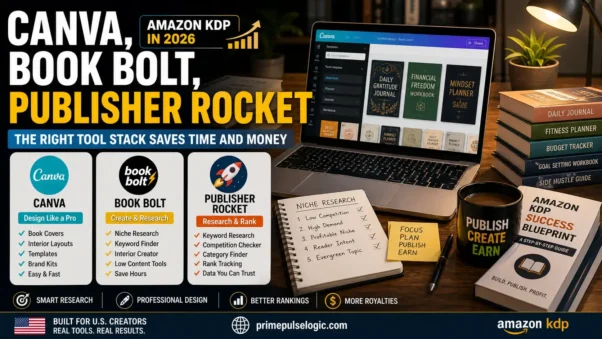
The smartest beginners use a small tool stack and give each tool one job. Canva for KDP works well because it helps you create clean visuals without hiring a designer for every draft. It also helps with book cover design and simple interiors when you need fast production. If your book looks messy, readers assume the content is messy too. That is why design matters so much in paperback publishing and ebooks alike.
Book Bolt for KDP and Publisher Rocket for keyword research fill a different role. Book Bolt helps with low-content creation and niche-friendly interiors, while Publisher Rocket helps with KDP keyword research for books and category ideas. Together, they support a sharper launch. The point is not to use more tools. The point is to use the right tool at the right stage.
| Tool | Best use | Why it matters |
| Canva | Covers and interiors | Keeps design fast and simple |
| Book Bolt | low content books and interiors | Saves time for repeatable formats |
| Publisher Rocket | Keywords and categories | Helps with how to find profitable Amazon KDP keywords |
A good book formatting routine also saves you from headaches later. Clean spacing, readable fonts, and correct trim sizes matter more than many beginners think. A book that feels polished usually earns more trust.
How to Find Profitable Niches in Amazon KDP in 2026
This is where beginners often win or lose. Good niche research tells you what buyers already want. Bad guesswork gives you a book nobody searches for. Start with an Amazon.com search, look at the top results, and read the titles, covers, and reviews. That helps you spot a profitable niche instead of chasing a random trend. If the top books all look weak, there may be an opening. If the top books are strong and specific, you may need a sharper angle.
The best approach to profitable KDP niches in the USA is simple. First, study buyer intent. Then check the competition. Then compare price points and review counts. Finally, ask whether you can make a better book for a smaller audience. That is how beginners find real opportunities. It is slower than guessing, but it works better.
How Keywords Work in Amazon KDP in 2026 Rankings
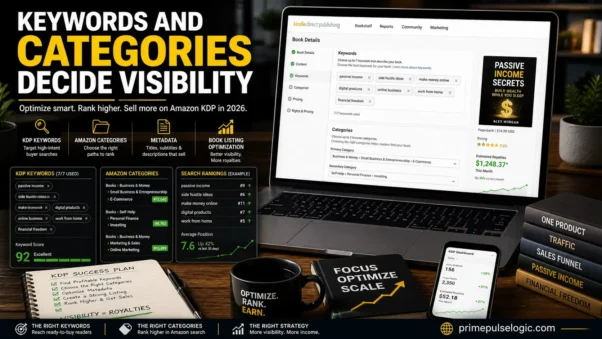
A good book with weak metadata can still disappear. That is why KDP keywords, Amazon categories, and browse categories matter so much. Amazon uses those clues to decide what your book is about and who should see it. If your listing does not match the search terms buyers use, your book may never show up where it should. That is why metadata is not a boring technical detail. It is the doorway to discoverability.
Your book description also matters more than people think. It should speak clearly, use natural keywords, and make the reader feel safe clicking. Poor descriptions usually read like filler. Strong descriptions answer one question fast: what is this book, who is it for, and why should I care? That is the basic shape of book listing optimization. It helps the sales rank, supports early sales velocity, and gives the Amazon search algorithm a cleaner signal.
Common Mistakes in Amazon KDP in 2026 Beginners Must Avoid
Most beginners fail for the same reasons. They choose the wrong niche, rush the launch, ignore reviews, and treat the book like a one-time upload. They also misunderstand Kindle Unlimited, formatting rules, and the real role of customer reviews. A book can be publishable and still not sell if the offer feels vague. That is why quality and positioning matter more than volume alone.
Another common mistake is forgetting the math. If the print cost is too high, the margin disappears. If the price is too low, the book may sell but still make a weak profit. Beginners also forget that one weak book does not create a business. A better mindset is simple: build the offer, watch the numbers, then improve the next title. That is what separates sellers from hobbyists.
How to Scale Books in Amazon KDP in 2026
Once the first book goes live, the real work begins. Scaling means turning one title into a small catalog that supports the same audience. That might mean one eBook, one paperback, and one related eBook, paperback, or low-content book set. It can also mean adding new topics that still fit the same buyer. This is how many creators build a stronger self-publishing business model, rather than waiting for one book to do all the work.
You should also think beyond the upload. Check the listing, watch the reviews, and update the description if needed. A smart book launch checklist helps here because it keeps you focused on the basics. One title can teach you a lot. Three titles can show you a pattern. Ten titles can build a system.
Why Amazon KDP in 2026 Works Better for U.S. Buyers
U.S. readers buy differently from readers in other markets. They often want direct promises, clean covers, and books that solve a very specific problem. That is why U.S. market research matters so much. If you understand American search habits, you can position the book more clearly. That means better titles, sharper subtitles, and stronger category choices.
This also affects how you use Author Central and your author platform. Even if you are just starting, your profile should look steady and real. Readers trust a creator who feels organized. In simple terms, U.S. buyers want clarity. If your book speaks their language, they notice it faster.
What to Do Next After Starting Amazon KDP in 2026
Publishing is not the finish line. It is the start of your test. After launch, check what the market tells you. If the cover underperforms, improve it. If the description is weak, rewrite it. If the keywords miss the mark, adjust them. Small changes can lift a book more than many beginners expect. That is how you build a smarter Amazon KDP beginner guide for your own work.
A strong next step is to turn the process into a repeatable system. Research one niche, build one book, publish it, then repeat with a better version. That is how you move from guessing to building. It is also how a beginner learns how to scale KDP books without burning out.
FAQs:
Does Amazon KDP still work in 2026?
Yes, it still works if you pick the right niche, use strong keywords, and publish quality books.
Can beginners earn $1,000 a month on KDP?
Yes, but usually through a catalog of books, not one title.
Do I need writing experience to start?
No, you need structure, research, and a simple publishing process.
Which tools help most at the start?
Canva, Book Bolt, and Publisher Rocket are the most useful beginner tools.
What should I publish first?
Start with a simple niche eBook, planner, journal, or workbook that matches real buyer demand.
Printable KDP Checklist
| Step | What to check | Why it matters |
| 1 | Pick one niche | Keeps your book focused |
| 2 | Check Amazon search results | Shows real demand |
| 3 | Choose one format | Makes production easier |
| 4 | Build a clean cover and interior | Improves trust |
| 5 | Write a clear description | Helps conversions |
| 6 | Add strong keywords and categories | Improves discoverability |
| 7 | Review pricing and print cost | Protects your margin |
| 8 | Launch, then review results | Helps you improve the next book |
Start Your Amazon KDP Plan Today
If you want to build a real publishing plan instead of guessing your way through Amazon KDP in 2026, start with one niche, one book, and one clean workflow. Keep it simple, keep it specific, and keep improving. For deeper help with strategy, content planning, and SEO-driven publishing growth, visit https://primepulselogic.com/ and reach out through the contact form.