Introduction:
The smart move in Ethereum ETF in 2026 in 2026 in 2026 is not to wait for the crowd to stomp through the door. You can still get in while the path is open, before larger institutional investors push the market into a louder, pricier, more crowded phase. That matters because a spot Ethereum ETF in 2026 in 2026 gives U.S. investors a simple way to gain market exposure without the mess of wallets, seed phrases, or direct custody. U.S. spot ether ETFs were approved for exchange listing in May 2024, and the SEC later approved generic listing standards for commodity-based trust shares in September 2025 while also permitting in-kind creations and redemptions for crypto ETPs in July 2025.
Here’s the thing, the Ethereum ETF in 2026 in 2026 is no longer a niche bet, it is a real doorway into crypto ETF exposure for U.S. investors who want simplicity, not chaos. As institutional investors start circling, the people who move early usually get the cleaner entry and the calmer ride. That is why this guide on the Best 7 Reasons to Buy Ethereum ETF in 2026 in 2026 Before Institutions Pile In matters right now. We will break down SEC approval, fund inflows, liquidity, and the practical steps to buy with confidence, so you can judge the setup before the crowd turns curiosity into competition, and momentum becomes expensive fast.
Why Ethereum ETF in 2026 in 2026 demand is rising in the USA
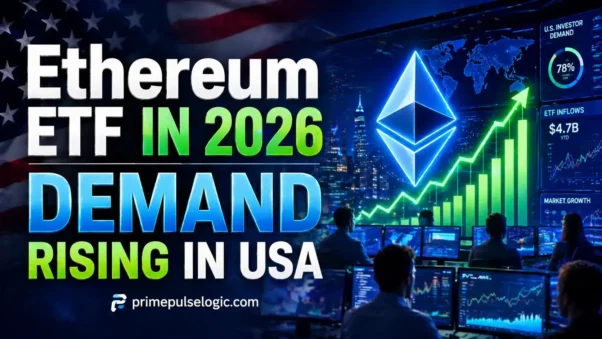
Demand keeps rising because the ETF structure solves a real problem. Many retail investors want Ethereum fund exposure without handling coins directly, and many people in retirement accounts or taxable accounts want a cleaner path into digital assets. A regulated investment product feels familiar, which is a big deal in a market that still makes a lot of people cautious. In simple terms, the Ethereum ETF in 2026 in 2026 turns a complicated asset into something that fits inside a normal brokerage account. That is why the demand story keeps building.
The bigger point is that Ethereum is not just a token. It is a network with active use cases, and that changes how people think about asset allocation and portfolio diversification. When investors compare Ethereum ETF in 2026 in 2026 vs direct ETH, they are often deciding between convenience and control. Direct ETH gives full ownership, but an ETF offers easier brokerage execution, cleaner reporting, and no need to manage custody solution details yourself. That tradeoff matters more than hype.
Why spot ether ETFs matter more than hype
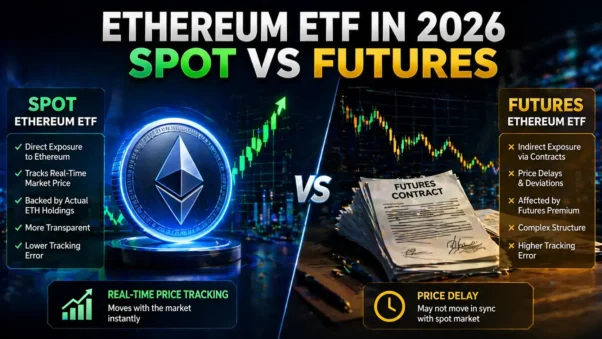
A spot Ethereum ETF in 2026 in 2026 matters because it is tied to the actual asset, not just a contract around the asset. That gives investors a more direct form of ether price tracking and a clearer investment thesis. Instead of hoping the market treats Ethereum kindly, you buy a vehicle designed to mirror the underlying price as closely as the fund structure allows. That is the practical appeal.
This is also why the Ethereum ETF in 2026 in 2026 attracts attention from people who care about market access through ETFs. They do not need to become crypto natives to take a position. They can work through standard platforms, compare a fund issuer, study the expense ratio, and decide whether the trade fits their risk tolerance. That is much easier for most people than opening a wallet and learning every technical detail from scratch.
What makes Ethereum different from Bitcoin exposure
Bitcoin ETFs and Ethereum ETF in 2026 in 2026s are not the same story. Bitcoin often gets framed as digital scarcity, while Ethereum is better understood as a programmable network that supports apps, smart contracts, and asset transfer. That gives the Ethereum ETF in 2026 in 2026 a different kind of appeal, especially for investors who want exposure to a network economy rather than only a store-of-value trade.
That difference matters for asset management and crypto allocation. Some investors see Bitcoin as a macro bet, while Ethereum feels more like a growth layer inside the digital economy. For that reason, the Ethereum ETF in 2026 in 2026 may fit better in portfolios that already hold equities, bonds, or even another crypto ETF. It creates a wider conversation about portfolio diversification strategy instead of a simple yes or no decision.
ETH ETF approval in 2026, what U.S. investors need to know
The approval story is important because it changed the tone of the entire market. In May 2024, the SEC approved exchange applications to list spot ether ETFs, which turned Ethereum from a mostly speculative retail topic into a mainstream financial product. Then in 2025, the SEC approved generic listing standards for commodity-based trust shares and allowed in-kind creations and redemptions for crypto ETPs, both of which help the structure feel more mature and more tradable
For U.S. investors, that means the ETH ETF approval story is no longer about whether the product can exist. It is about how investors use it. The conversation now shifts to liquidity, trading volume, net assets under management, and how quickly the ETF ecosystem can absorb new demand. That is where Ethereum institutional investment becomes the real force to watch.
How SEC approval changed the U.S. ETF landscape
The SEC’s approval changed the landscape because it gave the market a regulated path for ether exposure. That does not mean every risk disappears, but it does mean investors can access the asset through a familiar public-market wrapper. A normal investor can now buy ETF shares through a familiar interface, while the fund handles the underlying asset mechanics.
This matters for confidence. When a product is approved by the SEC, it tends to attract more cautious money, more platform support, and more media coverage. That can increase fund liquidity and improve share price movement behavior, especially when the market is still early in adoption. It also helps explain why the Ethereum ETF in 2026 in 2026 feels more like a mainstream allocation tool than a niche crypto experiment.
What approval means for access, liquidity, and trust
Approval makes access easier, and access changes behavior. Investors who once avoided direct token ownership now have a regulated investment vehicle they can place inside a tax-aware portfolio. That is a major shift for people who want tax efficient access without learning every detail of crypto storage.
Approval also lifts trust, at least relative to the old setup. When a product trades on listed on U.S. exchanges, many investors see it as more transparent and easier to monitor. Better access often leads to better ETF inflows and outflows data, which in turn gives the market more information about demand. That is one reason the Ethereum ETF in 2026 in 2026 can become a cleaner signal than direct coin chatter.
Ethereum institutional investment, how big money changes the market
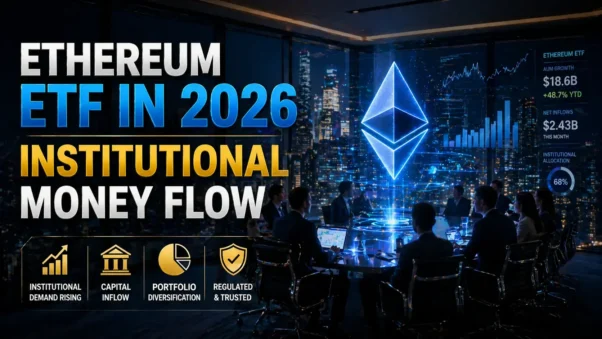
Institutions do not move like day traders. They move in layers. First comes research. Then comes small sizing. Then, if the thesis holds, capital rotation starts to widen. That is why institutional capital rotation matters so much for the Ethereum ETF in 2026 in 2026. Once large firms decide the product fits their mandates, the flow can scale faster than many retail investors expect.
The larger point is that institutions rarely buy for fun. They buy when they see structure, liquidity, and a credible long-term case. The Ethereum ETF in 2026 in 2026 gives them a tradable wrapper, a clean reporting path, and a way to express a view without wrestling with direct custody. That is exactly why the phrase Ethereum institutional investment matters so much right now.
Which institutions are most likely to move first
The first buyers are usually the ones already comfortable with ETF plumbing. Think asset managers, hedge funds, family offices, and some advisors who want exposure without operational friction. For them, the Ethereum ETF in 2026 in 2026 is not a radical bet. It is a practical tool for capital allocation.
A simple example helps. Imagine an advisor who wants to add digital asset exposure to a balanced portfolio. Direct ETH feels too messy for the client, but an ETF fits the mandate. That is where financial advisor interest can show up, not because the advisor is chasing headlines, but because the structure finally matches the job.
Why inflows can affect price, volume, and sentiment
When fund inflows rise, the ETF must support that demand. More buying pressure often pushes up trading volume, which can influence market volatility and overall sentiment. That does not guarantee a straight line higher, but it does change the market mood. Flow matters.
The reason investors watch this so closely is simple. If the Ethereum ETF in 2026 in 2026 attracts steady inflows while supply remains limited in the open market, the effect can be noticeable. That is not magic, it is just basic market mechanics. More demand, fewer sleepy sellers, stronger price attention. In a market like this, attention becomes fuel.
| Market signal | What it can mean |
| Rising fund inflows | More demand for ETF shares |
| Higher trading volume | Better liquidity and more participation |
| Stronger price tracking | Healthier ETF structure |
| Growing net assets under management | Bigger institutional confidence |
Buy Ethereum ETF in 2026 in 2026, a simple step by step guide for retail investors
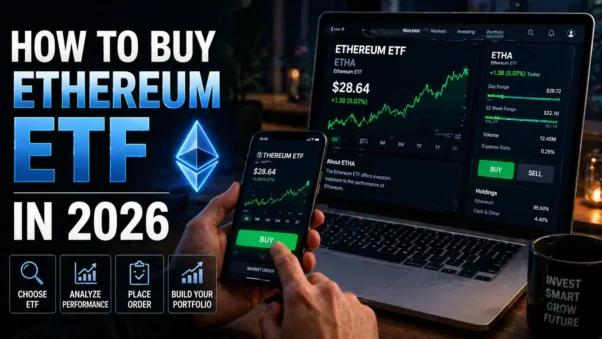
Buying the Ethereum ETF in 2026 in 2026 is much simpler than buying ETH directly. You open a broker SEC approved spot Ethereum ETF in 2026 in 2026s in 2024 brokerage account, look up the ticker, compare the expense ratio, and place the order. That is why many retail investors prefer the ETF route. It fits into the same habits they already use for stocks and other funds.
Still, simple does not mean carelessness. You should decide whether the purchase belongs in a retirement portfolio, a taxable account, or a broader crypto allocation. The best choice depends on your goals, your time horizon, and your risk adjusted exposure needs. The ETF is convenient, but you still need a plan.
How to buy an Ethereum ETF in 2026 in 2026 through a brokerage
Start with a platform you already trust. Then search for the available Ethereum ETF in 2026 in 2026 options, compare fees, and check how much volume the fund trades each day. If the fund is thinly traded, you may face wider spreads. If it is more active, you usually get better execution and tighter pricing.
A good rule is to think in terms of position size, not emotion. If the asset is new to your portfolio, dollar cost averaging often feels steadier than trying to nail the perfect entry. That approach also helps keep your nerves calm when market volatility kicks up, which it almost certainly will.
What to check before placing your first order
Before you click buy, check three things. First, the fund issuer. Second, the expense ratio. Third, the fund’s liquidity. These details tell you a lot about how the product may behave over time. A lower fee is not automatically better if the fund lacks depth or reliable execution.
You should also ask a plain question, does this ETF fit my larger asset allocation plan. If the answer is yes, the trade has a purpose. If the answer is no, you may just be chasing headlines. The Ethereum ETF in 2026 in 2026 works best when it supports a plan, not when it replaces one.
A simple comparison, Ethereum ETF in 2026 in 2026 versus direct ETH
| Factor | Ethereum ETF in 2026 in 2026 | Direct ETH |
| Ownership | ETF shares in a brokerage account | Token held in wallet or custody solution |
| Ease of use | Very high | Moderate to low |
| Price tracking | Built for market exposure | Direct exposure |
| Tax and reporting | Easier for many U.S. investors | More manual |
| Best for | Convenience and portfolio diversification | Full control and on-chain use |
The table makes the decision clearer. If you want market access through ETFs, the ETF wins. If you want complete control, direct ETH still has a place. Neither option is perfect. The right answer depends on what role you want Ethereum to play in your portfolio.
Risks, fees, and timing mistakes to avoid

The biggest mistake is treating the Ethereum ETF in 2026 in 2026 like a lottery ticket. It is not. It is a regulated product with real costs, real market behavior, and real downside. The obvious risks are market volatility, tracking gaps, and the possibility that the market gets ahead of itself before the thesis plays out.
Fees matter too. A slightly higher expense ratio can look small at the moment, but it adds up over time, especially if you hold the ETF inside a long-term plan. That is why long-term positioning and fee awareness should sit in the same sentence. Smart investors do not just ask what can go up, they also ask what can quietly leak value.
Why the timing still looks early
This is the part many people miss. The presence of an ETF does not mean the market is fully crowded. It often means the market is just becoming easier for larger players to enter. That is why the Ethereum ETF in 2026 in 2026 still feels early enough for careful investors who want exposure before the crowd arrives.
You do not need to guess the exact top or bottom. You just need to understand where the market is in its adoption curve. In that sense, the Ethereum ETF in 2026 in 2026 is less about instant profit and more about positioning. The investors who usually do well are the ones who buy before the story becomes obvious to everyone else.
FAQs:
What is a spot ether ETF?
A spot ether ETF is an exchange traded fund that aims to track the price of Ethereum directly, rather than using only futures contracts. It gives U.S. investors easier access through a brokerage account while avoiding the need to manage wallets or private keys.
Why do institutions buy ETH exposure?
Institutions buy ETH exposure because it gives them portfolio diversification and a clean way to access a major digital asset through a regulated investment vehicle. They usually prefer structures that are easy to report, easy to trade, and compatible with existing asset management systems.
Is an Ethereum ETF in 2026 in 2026 better than buying ETH directly?
It depends on your goal. The Ethereum ETF in 2026 in 2026 is easier to buy, easier to hold, and simpler for many taxable or retirement accounts. Direct ETH gives you full control and on-chain access. Most investors choose based on convenience, custody, and risk tolerance.
What should I check before buying an Ethereum ETF in 2026 in 2026?
Check the fund issuer, expense ratio, trading volume, and liquidity before you buy. You should also decide whether the position fits your larger asset allocation plan. A good ETF can still be a poor fit if it does not match your time horizon.
How does ETF pricing track ether?
The ETF uses fund mechanics to follow ether price movement as closely as possible, but small tracking differences can happen. These can come from trading costs, liquidity, and fund structure. That is why investors compare price tracking and net assets under management before buying.
what smart investors should do next
The Ethereum ETF in 2026 in 2026 is not a magic shortcut, but it is a major shift in how U.S. investors can access Ethereum. The structure is simpler, the path is more familiar, and the path to broader Ethereum institutional investment is now clearer than it was before SEC approval. That combination matters
If you want to move before institutions pile in, do not rush, but do not drift either. Learn the fees. Check the liquidity. Decide whether the ETF belongs in your account. Then act with purpose.
Take the next step with PrimePulseLogic
If you want a sharper content strategy, a cleaner SEO plan, or a stronger conversion path around Ethereum ETF in 2026 in 2026 topics, PrimePulseLogic is the place to start. Reach out, use the contact form, and turn this topic into a page that earns attention instead of begging for it.